


How To Future-Proof A Business Website: 7 Essentials
The only thing that you can be certain of in this digital age is that nothing is certain. That’s why it’s important to know how to future-proof a business website – so you can be prepared for whatever may come next.
A website is any business’s most prized digital asset. They take considerable time to create and optimise, and cost a lot of money. When new tools, trends, user behaviour and product diversifications occur – which they undoubtedly will at some point – your website needs to be able to adapt accordingly, without first requiring an entire rebuild.
A site that is flexible and forward-thinking will save time, money, and effort in the long run. Read on for the website essentials that can help you build your site with tomorrow in mind.
KEY TAKEAWAYS
- Future-proofing helps businesses stay flexible and ready to adapt to digital changes.
- A future-ready website is built to grow with your business, not hold it back.
- Scalability, flexibility, and performance should be considered from the start.
- User experience, security, and SEO all play an important role in long-term website success.
- Choosing the right platform, domain name, hosting and design layout upfront can save businesses time and money over the long-term.
TABLE OF CONTENTS
What is Future-Proofing in Business?
Future-proofing is a type of business strategy that draws on flexibility and creativity to keep a business ready for whatever the future may bring. It’s not about predicting the future, but rather about realising that changes in customer behaviour, technology and trends can potentially affect your business and require you to adapt accordingly.
What Does Future-Proofing a Website Mean?
Future-proofing a website means building it for the future. Making certain choices early on and adopting specific strategies from the get-go that will ensure that your main digital presence will continue to bring your business value even if the rules change. It requires businesses to stay abreast of changes in the way people search online, as well as the way in which AI reads content, etc.
Why is it Important to Future-Proof a Business Website?
Taking the time to plan a website that will be relevant for years to come offers several long-term benefits for businesses, including:
It shows your business is innovative and competitive
A modern, adaptable website signals to customers that your business is forward-thinking and prepared to evolve alongside industry trends and customer expectations. Businesses that regularly improve how they appear online often appear more trustworthy, professional and competitive than those with “outdated” websites.
Future-proofing also helps businesses stay ahead of competitors by making it easier to adopt new tools, technologies and customer experience improvements, as and when they happen.
It helps you prioritise user experience
Customers expect a lot from their browsing experiences these days. They expect that websites should load quickly, navigate easily, work seamlessly on mobile devices and provide relevant information without user-frustration.
Future-proofing encourages businesses to design with user experience in mind from the beginning. A website that is responsive, accessible and easy to use is far more likely to keep visitors engaged, reduce bounce rates, and encourage conversions.
It will help support your business’s growth
As businesses grow, their websites often need to evolve too. You may eventually need to add new service pages, product categories, online stores, booking systems, customer portals or a multilingual functionality.
A website built for the future provides the flexibility and scalability needed to support this growth, without requiring a complete redesign every time your business changes direction or expands into new markets.
It will boost your Search Engine Optimisation (SEO)
Search engines favour websites that offer strong user experiences, quality content, fast loading speeds and mobile-friendly design. Many of the same practices used to future-proof a website also contributes towards better SEO performance.
It saves time, money, and effort
Rebuilding a website from scratch every few years can be costly, time-consuming and disruptive to business operations. Building for flexibility helps reduce the likelihood of major overhauls by creating a strong, adaptable foundation from the beginning.
It makes adapting to technology changes easier
Digital technology evolves rapidly, from AI-powered search experiences to automation tools and voice searches. Businesses that build flexible websites are far better equipped to integrate new technologies as they become more mainstream.

It helps build long-term customer trust
Customers are more likely to trust businesses with secure, professional and reliable websites. Features such as SSL Certificates, secure payment gateways, privacy compliance and fast website performance all contribute towards a positive customer experience.
How to Future-Proof a Business Website: 7 Website Essentials
Creating a future-proof business website is without a doubt worth all the fuss, but what does it mean practically?
Here are the seven website essentials you should prioritise:
1. Register a domain name and extension that can grow with your brand
While a highly specific domain name may suit your business now, it could become restrictive if your products, services or target market evolve at a later stage.
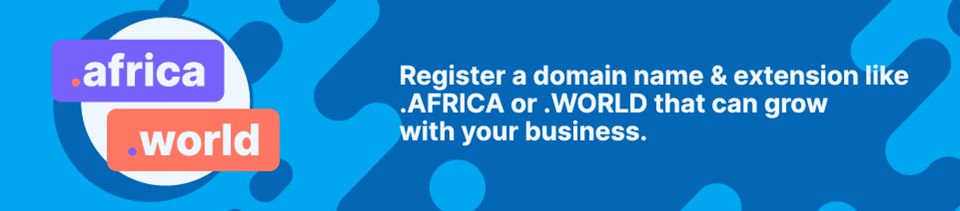
Registering a flexible and brandable domain name gives your business room to grow without requiring a costly rebrand or website migration in the future. Likewise, selecting versatile domain extensions such as .AFRICA, .WORLD, .GLOBAL, or .INTERNATIONAL can support regional or global expansion more naturally.
2. Choose a flexible & scalable platform
Your website is the cornerstone of everything you do online. For this reason; the platform you choose matters. And the flexibility and scalability of that platform are very important. As your business grows, your website should be able to accommodate additional pages, new products, expanded services, and evolving functionality, without needing to be rebuilt from scratch multiple times.
Well designed and structured Content Management Systems (CMSs) like WordPress make this possible by offering a flexible structure that can adapt over time. WordPress plugins and integrations also allow businesses to add features as they are needed, whether that’s eCommerce functionality, booking systems, memberships, customer portals, or AI-powered tools.
Even if you choose a website builder, it’s important to select one that can upscale alongside your business needs.
RELATED: Website Builder vs WordPress: Which Is Best For Your New Business?
3. Choose a responsive and modular design
Website design trends may come and go, but functionality and usability should always remain a priority.
With mobile browsing continuing to grow with more users, businesses cannot afford to have websites that break, load poorly or display incorrectly on smaller screens. Responsive design improves user experience, keeps visitors engaged for longer and can also positively impact SEO.
Modular website design is equally important for future-proofing. Instead of relying on rigid layouts, modular designs use reusable content sections that can easily be rearranged, updated or expanded as your online business needs change. This makes it far easier to refresh pages, launch campaigns or add new functionality without redesigning the entire site.
RELATED: Mobile-Friendly Website Creation: 8 Best Practices
4. Think about implementing new technology
When planning your website, it’s worth considering how emerging technologies could eventually integrate into your digital strategy.
For example:
- AI-powered tools can improve personalisation, automate customer support and help optimise content for search engines and AI-driven search results.
- Voice search optimisation is becoming increasingly important as more users search online through smart devices and virtual assistants.
- Some industries may also benefit from immersive technologies such as augmented reality (AR), virtual try-ons or interactive 3D tours.
- Inclusive design features such as screen reader compatibility, keyboard navigation and accessible layouts can further improve usability for all visitors while helping businesses meet accessibility expectations.
- Automation is another important consideration. Integrating systems such as booking forms, CRM platforms, synced calendars and email marketing tools can help streamline operations, improve customer experience and reduce repetitive manual tasks.
5. Build with speed and performance in mind
We can’t ignore the fact that website visitors expect fast-loading, seamless online experiences. If your website loads slowly or performs poorly, your visitors are far more likely to leave before engaging with your content, products or services. And if your bounce rates are high, your SEO will suffer.
Building with performance in mind from the start can therefore have a long-term impact on your business success.
This includes optimising image sizes, reducing unnecessary scripts, limiting bloated plugins and implementing caching where possible. Choosing fast, reliable and secure Web Hosting or WordPress Hosting is equally important, as hosting quality directly affects uptime, loading speed and overall website stability.
6. Prioritise security and compliance
Cybersecurity threats continue to evolve, making website security an essential part of future-proofing any business website. Even small businesses are increasingly targeted by cybercriminals, which means security should never be treated as an “afterthought”.
Keeping your CMS, plugins and PHP versions updated helps protect your website against vulnerabilities, bugs and security exploits. Regular updates also improve compatibility with newer technologies and help maintain website performance.
Businesses should also prioritise secure hosting, SSL Certificates, strong password policies and regular website backups. These measures help protect valuable customer and business data while reducing downtime risks.
Compliance is equally important. South African businesses must ensure they handle customer information responsibly and in accordance with regulations such as POPIA. Transparent privacy policies, secure data collection methods, and responsible data storage practices, all contribute towards building long-term customer trust.
RELATED: The Role Of Web Hosting In Data Privacy & Website Security
7. Implement long-term SEO strategies
SEO should never be something added to a website as an afterthought. A future-proof website builds SEO foundations into the site from the very beginning.
Here are a couple of website optimisation tips to consider:
- Create a clear website hierarchy, logical navigation and well-structured URLs that make it easier for both users and search engines to understand your content.
- Make use of proper heading structures, strong calls to action and content written around real user search intent as this will help to improve visibility over time.
- Modern SEO is increasingly focused on readability, helpfulness and answering questions quickly. Write content using natural keyword placement, answer-first formatting and concise “TL;DR” (too long; didn’t read) style summaries can improve both user experience and AI readability.
- Long-term SEO strategies also include regularly updating content, monitoring search trends and adapting to changes in how people search online.
At the end of the day, businesses that invest in sustainable SEO practices are far more likely to maintain visibility as algorithms and digital behaviour continue to evolve.
Learning how to future-proof a business website will help business owners build a strong digital foundation that can grow and adapt as the years go by. From choosing the right domain name and up-scalable website platform, to investing in secure, high-performance hosting, every decision made today can impact how your website evolves tomorrow.
Build a strong online foundation with Domains.co.za.
![Strip Banner Text - Sign up for fast, secure & scalable hosting so your website always loads quickly & runs properly. [Explore plans]](https://www.domains.co.za/blog/wp-content/uploads/2026/05/future-proof-your-website-04.webp "Sign up for fast, secure & scalable hosting so your website always loads quickly & runs properly. [Explore plans]")
How to Choose the Right Web Hosting Plan for Your Website
VIDEO: How to Choose the Right Web Hosting Plan for Your Website
FAQS
What does it mean to future-proof a website?
Future-proofing a website means building it in a way that allows it to adapt to future technology, customer behaviour and business growth without needing constant rebuilding.
Why is scalability important for a business website?
Scalability ensures your website can grow alongside your business by supporting additional pages, features, products and traffic over time.
Does website speed affect SEO?
Yes. Website speed is an important ranking factor for search engines, and it impacts user experience and conversion rates.
Why is responsive design important?
Responsive design ensures your website works correctly across different screen sizes and devices, improving usability and engagement.
What role does hosting play in future-proofing a website?
Reliable hosting improves website speed, uptime, security and performance, all of which contribute to a better long-term user experience.
Other Blogs of Interest
- 14 Questions About Domain Names And Website Hosting Answered
- Domains.co.za Launches Complete Domain Protection Package To Safeguard And Boost Domain Performance
- Looking for Fast, Secure & Stable WordPress Hosting for Your Website?
- Business Essentials: A Guide To Choosing The Right Website Name
- How Do I Register A Domain Name?

Chantél Venter is a creative writer, strategic thinker, and a serious gesticulator. She’s passionate about storytelling, small businesses and bringing color to the world – be it through her words or wardrobe.
She holds a four-year degree in Business and Mass Media Communication and Journalism. She’s been a copywriter and editor for the technology, insurance and architecture industries since 2007 and believes anybody can run a small business successfully. She therefore enjoys finding and sharing the best and most practical tips for this purpose.