


This guide explains the differences between DDoS vs DoS attack and how they can impact websites hosted on Domains.co.za servers.
Cybersecurity threats are a growing concern for websites and hosting services. Two common types of attacks that can affect website availability are DoS (Denial of Service) and DDoS (Distributed Denial of Service) attacks.
Both attack types are designed to overwhelm servers, networks, or applications with excessive traffic or requests, preventing legitimate users from accessing services. However, the way these attacks are carried out differs significantly.
TABLE OF CONTENTS
Where Do They Originate?
A DoS attack typically originates from a single source, while a DDoS attack uses multiple compromised systems distributed across different locations.
These attacks may target:
- Website servers.
- Networks.
- Applications.
- DNS services.
- Email servers.
The primary goal is to disrupt normal operations and make services unavailable.
Understand the difference between DDoS vs DoS Attacks
1. Login to the Domains.co.za Customer Portal using your account credentials.
2. Open the Manage Services dropdown menu from the main dashboard navigation.
3. Select Web Hosting from the available service options.
4. Locate the hosting package linked to your domain name and click Manage.
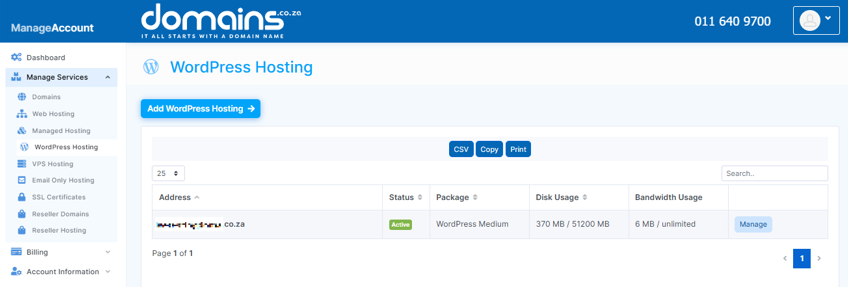
5. Click Login next to Control Panel to access cPanel.

6. Review your website resource usage and traffic statistics if you suspect unusual activity.
7. Monitor server performance and bandwidth usage for unexpected spikes.
8. Contact technical support if you believe your website is experiencing a DoS or DDoS-related issue.
Additional Information
- A DoS attack usually originates from a single device or internet connection.
- A DDoS attack uses multiple compromised devices, often called a “botnet”, to generate traffic simultaneously.
- DDoS attacks are generally more difficult to block because traffic comes from many different locations.
- Both attack types can slow down or completely disable websites and online services.
- Firewalls and traffic filtering systems help reduce the impact of malicious traffic.
- DDoS protection services monitor and mitigate suspicious traffic patterns automatically.
- High traffic spikes are not always malicious; they may result from legitimate visitor increases.
- Keeping website software regularly updated can help reduce vulnerabilities exploited during attacks.
Login to Domains.co.za Account
1. Go to the Domains.co.za website Account Login page.

2. Enter your Email and Password and click the Sign In button.
3. You will see the Domains.co.za Dashboard, displaying the Manage Account menu on the left and your Account Information, Account Overview and Open Support Tickets on the right.


